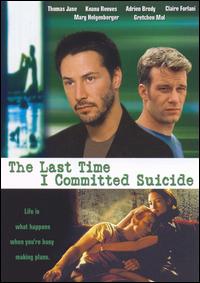
The first Beat movie I remember seeing was "The Last Time I Committed Suicide." I really liked this movie and I thought Thomas Jane did a fine job as Neal Cassady. He captured the energy and charisma, as well the sadness and lack of control. I wouldn't say Thomas Jane really resembles Neal, but he captured some essence, which is crucial for actors in such roles.
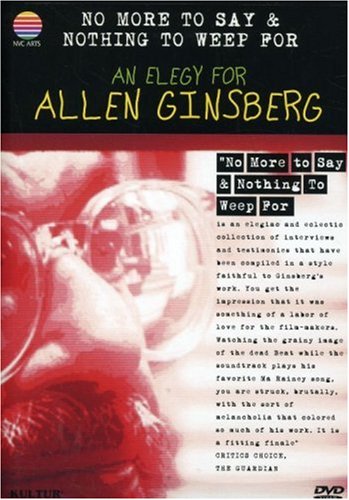
I have been very disappointed with how Allen Ginsberg has been depicted in the movies. They have tended to over-emphasize his homosexuality, without really showing his humanity. I have seen many interviews and videos of Allen Ginsberg. For me, the most influential was the A&E documentary (back when A&E did such things) No More to Say & Nothing to Weep For: An Elegy for Allen Ginsberg 1926-1997 (1997). This is my favorite documentary on the Beat Generation, with great interviews, good information, nice pacing, and most of all, great readings of Allen's work. In it, you get a sense of how Allen Ginsberg sounded both in interviews and in poetry readings. So based on that, I feel most Beat movies have not portrayed Ginsberg accurately or fairly. At various times, I feel the same way about how Jack Kerouac and Neal Cassady have been characterized.
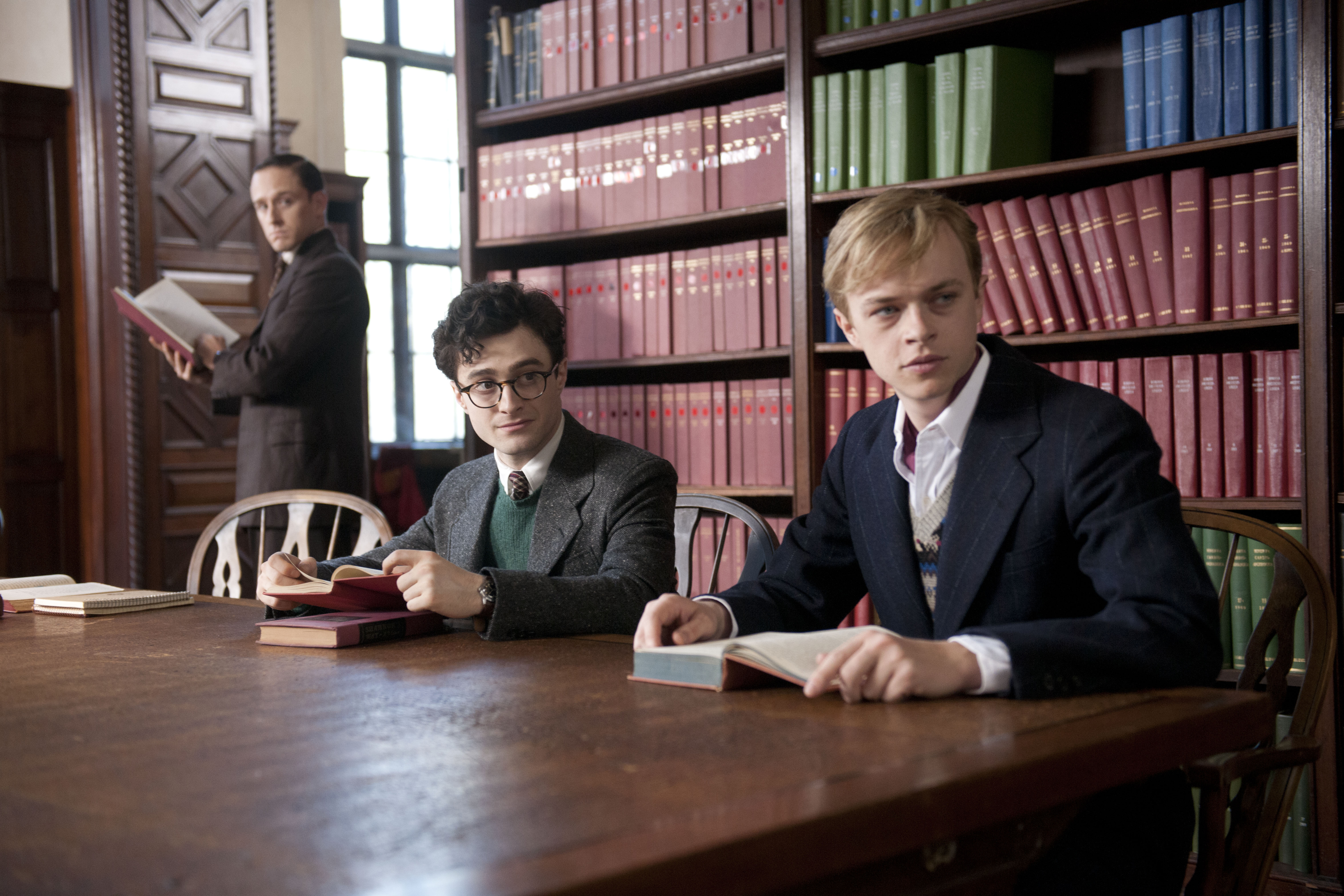
I did like Daniel Radcliffe's Allen Ginsberg in Kill Your Darlings. The film takes place during his days at Columbia University. I've read that Daniel really wasn't very familiar with Ginsberg before the movie, and that was probably a good thing. He plays him as a real human, not a caricature, with his curiosity, insecurity, intelligence, and love of literature, as well as his budding iconoclasm.
I really did not like Jack Huston as Jack Kerouac, and I found it to be a distraction. Jack Kerouac was not that confident, aggressive or arrogant. Although he was an adventurer and a football player, he had a great sensitivity. In fact, one of his defining characteristics is his empathy. Although he understood the importance of his voice, he had a lot of sadness, self-doubt, and humility. As Joyce Johnson noted in her interview with Terry Gross on Fresh Air, "Jack was all knotted up inside." He was not as much of a free spirit as he is often remembered. Well, Jack Huston essentially plays him as a brutish thug, and I really saw nothing of the essence of Kerouac in this. I really liked Jack Huston as Richard Harrow on "Boardwalk Empire." If he had played Kerouac with just a touch of the wounded vulnerability he gave to Harrow, this could have been a really great role. http://www.npr.org/templates/story/story.php?storyId=1124423

I did like the scene where Allen first meets William Burroughs. He walks into a bathroom at a party, and there is a guy in a suit laying in a bathtub wearing a nitrous oxide mask. You see that image, and right away, you know it's Burroughs. Burroughs is the one Beat character whose theatrical depiction has always been adequate, although this one is so-so. Peter Weller and Viggo Mortensen both did fine as Burroughs in their respective films.


I
In an article, Lucien's son claims that the film portrays Lucien Carr as a conflicted homosexual instead of as an abuse victim. I didn't reeally see that in the film. I had read the article before seeing the film, but upon viewing, did not think the idea of repressed homosexuality was as pronounced as I thought it would be. Dane DeHaan plays Lucien as a free spirit. Michael C. Hall is sad and creepy as Hammerer.
http://dailycaller.com/2014/02/24/son-of-famous-beat-murderer-lucien-carr-disputes-kill-your-darlings-films-version-of-events/
I've always had a difficult time connecting with this chapter of the Beat story. I did appreciate seeing the role Lucien Carr played in the development of the Beat 'Generation's' ideal of freedom.

